
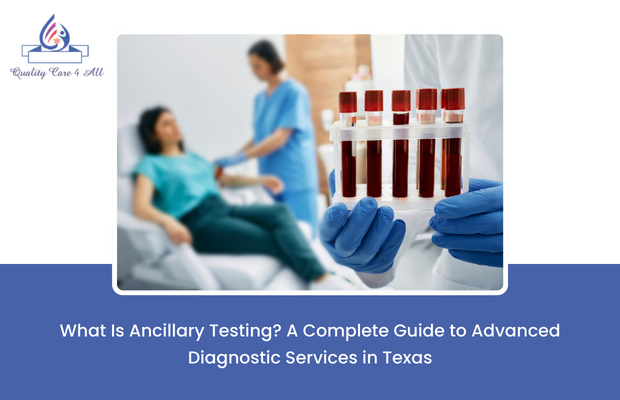
In today’s evolving healthcare landscape, patients are no longer satisfied with surface-level answers. Many individuals experience symptoms like fatigue, weight changes, hormonal imbalances, or chronic discomfort without receiving clear diagnoses. This is where advanced diagnostics step in. If you’ve been asking what is ancillary testing, you’re already moving toward a deeper understanding of your health.
Ancillary testing services are an essential part of modern, patient-centered care. They provide the additional insights needed to uncover root causes rather than simply managing symptoms. At Texans Health and Wellness, these services are designed to empower patients across Texas with accurate information, personalized treatment strategies, and long-term wellness solutions.
What Is Ancillary Testing?
To fully understand what is ancillary testing, it helps to break it down into simple terms. Ancillary testing refers to any supportive diagnostic procedure used alongside a primary medical evaluation. These tests provide measurable data that helps healthcare providers confirm diagnoses, monitor conditions, and guide treatment decisions.
The ancillary tests meaning extends beyond basic lab work. It includes a wide range of diagnostic tools such as blood tests, imaging studies, cardiovascular screenings, and specialized functional medicine assessments. While they may not always be the main focus of your visit, they often provide the most critical information about your health.
In essence, ancillary testing bridges the gap between symptoms and solutions by offering evidence-based insights.
Why Ancillary Testing Is Essential in Modern Healthcare
Healthcare is shifting from a reactive model—treating illness after it appears—to a proactive model focused on prevention and early detection. Ancillary testing services play a central role in this transformation.
Instead of relying solely on symptoms, providers can use diagnostic data to:
- Detect underlying health issues before they become serious
- Identify imbalances that may not be visible during a physical exam
- Create targeted, personalized treatment plans
- Track progress and adjust care as needed
For patients in Texas, where lifestyle factors, stress levels, and environmental influences can impact overall health, this proactive approach is especially valuable. Ancillary testing allows for earlier intervention and better long-term outcomes.
Types of Ancillary Testing Services
Ancillary testing services cover a broad spectrum of diagnostic tools. Each type serves a specific purpose in evaluating different aspects of your health.
1. Comprehensive Laboratory Testing
Laboratory testing is one of the most common forms of ancillary diagnostics. These tests analyze blood, urine, or other biological samples to provide detailed insights into your body’s internal processes.
They can help assess:
- Blood sugar levels and insulin resistance
- Hormonal balance
- Vitamin and mineral deficiencies
- Inflammation markers
- Liver and kidney function
These tests are essential for identifying both acute and chronic conditions. For example, early signs of metabolic disorders or nutritional deficiencies can be detected long before symptoms become severe.
2. Diagnostic Imaging Services
Imaging is another key component of ancillary testing. It allows healthcare providers to visualize internal structures without invasive procedures.
Common imaging tests include:
- Ultrasounds
- X-rays
- Advanced imaging when necessary
These tools are particularly useful for identifying structural abnormalities, injuries, or hidden conditions that cannot be detected through physical examination alone.
3. Cardiovascular and Heart Health Testing
Heart health remains a major concern across Texas. Ancillary testing services provide valuable data that can help detect cardiovascular issues early.
Examples include:
- Electrocardiograms (EKG)
- Blood pressure monitoring
- Cholesterol and lipid panels
These tests help assess heart function and identify risk factors for heart disease, allowing for early intervention and prevention.
4. Hormonal and Metabolic Testing
Hormonal imbalances can affect nearly every aspect of your health, from energy levels to mood and weight. Unfortunately, these imbalances are often overlooked without proper testing.
Ancillary testing services can evaluate:
- Cortisol (stress hormone) levels
- Thyroid function
- Estrogen and testosterone balance
- Metabolic efficiency
For many patients in Texas, especially those dealing with fatigue, weight gain, or mood changes, these tests provide critical insights.
5. Functional and Specialty Testing
Functional medicine focuses on identifying root causes rather than treating symptoms alone. Specialty ancillary tests are designed to provide a deeper understanding of how your body systems interact.
These may include:
- Gut health and microbiome analysis
- Food sensitivity testing
- Detoxification pathways
- Micronutrient testing
These advanced diagnostics are particularly beneficial for individuals dealing with chronic conditions or unexplained symptoms.
Who Should Consider Ancillary Testing?
Ancillary testing is not limited to individuals who are already ill. In fact, it is equally valuable for those who want to maintain optimal health.
You may benefit from ancillary testing services if you:
- Experience ongoing or unexplained symptoms
- Have chronic conditions such as diabetes or thyroid disorders
- Want a more detailed understanding of your health
- Are not seeing improvement with current treatments
- Are focused on preventive care and longevity
In Texas, more patients are choosing this proactive approach to take control of their health and avoid future complications.
How Ancillary Testing Supports Personalized Healthcare
One of the most significant advantages of ancillary testing is its ability to support personalized care. Every individual has unique biological needs, and a one-size-fits-all approach is often ineffective.
With the help of ancillary testing, healthcare providers can:
- Develop customized nutrition and lifestyle plans
- Prescribe treatments based on precise data
- Identify root causes instead of masking symptoms
- Continuously monitor progress and adjust care
This individualized approach ensures that patients receive care tailored specifically to their bodies and health goals.
The Growing Importance of Ancillary Testing in Texas
Texas is a diverse state with a wide range of health challenges. From busy urban lifestyles to environmental factors, many variables can impact overall wellness.
Ancillary testing services are becoming increasingly important because they:
- Improve early detection of chronic diseases
- Reduce the risk of complications
- Enhance the effectiveness of treatments
- Support preventive healthcare strategies
As more healthcare providers adopt data-driven approaches, ancillary testing is becoming a cornerstone of modern medicine in Texas.
What to Expect During the Ancillary Testing Process
If you are new to ancillary testing, understanding the process can help ease any concerns.
Step 1: Initial Consultation
Your provider will review your medical history, symptoms, and health goals.
Step 2: Test Recommendations
Specific ancillary tests are selected based on your individual needs.
Step 3: Sample Collection
This may involve blood draws, urine samples, or non-invasive procedures.
Step 4: Laboratory Analysis
Samples are analyzed to generate detailed reports.
Step 5: Results and Treatment Plan
Your provider interprets the results and creates a personalized care plan.
This structured approach ensures that every test contributes to a clear and actionable understanding of your health.
Benefits of Ancillary Testing Services
Understanding what is ancillary testing also means recognizing its wide-ranging benefits.
Key Advantages Include:
- Early detection of hidden health issues
- More accurate and reliable diagnoses
- Tailored treatment plans
- Improved monitoring of progress
- Better long-term health outcomes
These benefits make ancillary testing a valuable investment in your overall well-being.
Why Choose Texans Health and Wellness for Ancillary Testing
At Texans Health and Wellness, ancillary testing services are designed with a patient-first approach. The goal is not just to collect data, but to use that data to create meaningful, lasting health improvements.
Patients across Texas trust this approach because it offers:
- Comprehensive and integrative diagnostic services
- Focus on root causes rather than symptoms
- Personalized care tailored to individual needs
- Ongoing support and monitoring
This combination of science and compassion ensures that every patient receives high-quality, effective care.
Conclusion
So, what is ancillary testing? It is a powerful diagnostic tool that goes beyond basic evaluations to provide a deeper understanding of your health. By offering detailed insights into how your body functions, ancillary testing services help bridge the gap between symptoms and solutions.
For individuals in Texas seeking proactive, personalized care, these services are essential. Whether you are managing a chronic condition or simply looking to optimize your wellness, ancillary testing provides the clarity and direction needed to achieve your health goals.
FAQs
Ancillary testing includes additional diagnostic procedures such as lab tests, imaging, and screenings that support primary medical evaluations and improve diagnosis accuracy.
The ancillary tests meaning refers to supportive tests used to gather detailed health information beyond a basic physical exam.
Yes, ancillary testing services are highly beneficial for preventive care as they help detect potential health issues early.
Most ancillary tests are highly accurate when performed and interpreted correctly, making them essential for reliable diagnosis and treatment planning.
The timeline varies depending on the test. Basic lab results may take a few days, while specialized tests may take longer.
Yes, they play a crucial role in diagnosing and managing chronic conditions by providing detailed insights into underlying causes.
Coverage depends on the type of test and your insurance provider. It’s best to consult your healthcare provider for specific details.
Contact Us: Texans Health and Wellness in Texas