
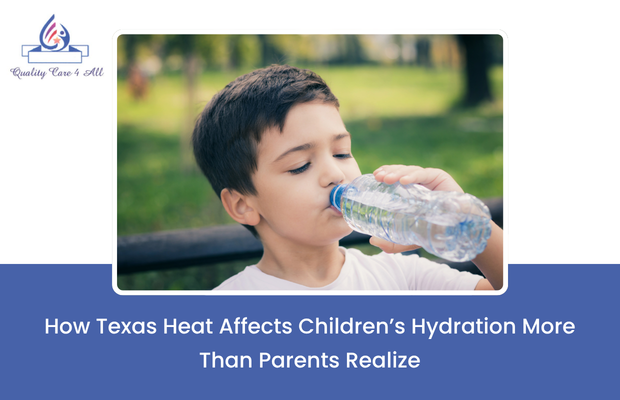
A child who suddenly becomes unusually tired after soccer practice, complains of headaches during a family outing, or seems cranky and “off” during a hot Texas afternoon may not simply be exhausted. In many cases, these are early dehydration symptoms in kids Texas parents can easily overlook — especially during long stretches of intense heat.
Texas summers are demanding on adults, but they can affect children even more quickly. Kids lose fluids faster, often forget to drink enough water, and may not recognize the warning signs their bodies are giving them. By the time obvious symptoms appear, dehydration may already be affecting energy levels, concentration, digestion, mood, and physical performance.
At Texans Health & Wellness, many families across areas like McKinney, Plano, Frisco, and Garland are becoming more aware that hydration is not only about drinking water. Nutrition, sleep, heat exposure, stress, activity levels, and underlying health imbalances can all influence how a child’s body handles extreme temperatures.
Why Children Are More Vulnerable to Heat and Dehydration
Children naturally regulate body temperature differently than adults. Their bodies heat up faster, they sweat differently, and they often continue playing even after becoming overheated.
This becomes especially concerning during Texas summers when:
- Temperatures remain high for extended periods
- Outdoor sports and camps increase physical exertion
- Sugary drinks replace proper hydration
- Busy schedules disrupt healthy eating habits
- Children spend long periods in direct sunlight
What causes pediatric dehydration?
Pediatric dehydration happens when the body loses more fluids and electrolytes than it takes in. This can happen quickly during hot weather, especially if a child is:
- Sweating heavily
- Not drinking enough fluids
- Experiencing vomiting or diarrhea
- Eating poorly during busy summer activities
- Spending prolonged time outdoors
Even mild dehydration can affect focus, mood, sleep quality, digestion, and energy.
Common dehydration symptoms in kids Texas parents should never ignore
Some symptoms are subtle and easy to mistake for tiredness, irritability, or “just being emotional.”
Early signs of dehydration in children
Watch for:
- Dry lips or dry mouth
- Headaches
- Fatigue or low energy
- Dizziness
- Dark yellow urine
- Reduced urination
- Muscle cramps
- Irritability or mood swings
- Difficulty concentrating
- Increased thirst
- Constipation
- Nausea after outdoor activity
In younger children, symptoms may include:
- Fewer wet diapers
- Crying without tears
- Unusual sleepiness
- Sunken eyes
- Refusing fluids
When dehydration becomes more serious
More advanced symptoms may include:
- Rapid heartbeat
- Confusion
- Extreme lethargy
- Vomiting
- Fainting
- Rapid breathing
- High fever
If these symptoms appear, medical attention should not be delayed.
How Heat Exhaustion Children Experience Can Escalate Quickly
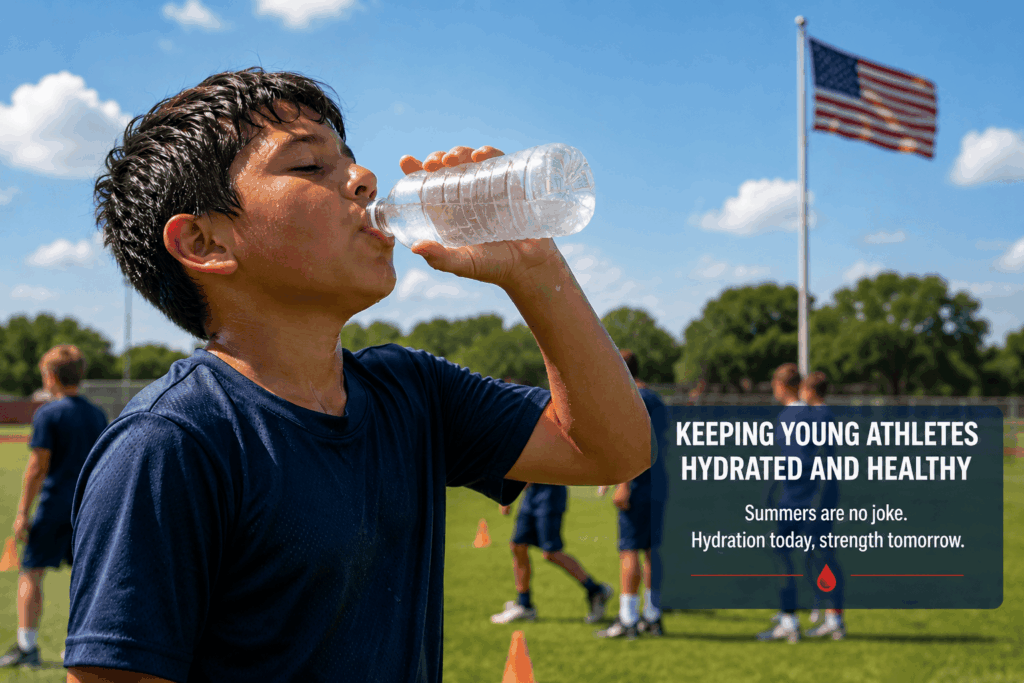
Many parents assume heat exhaustion only affects adults working outdoors. In reality, heat exhaustion children experience during sports, camps, playground activities, or even family vacations can develop rapidly.
Signs of heat exhaustion in children
Common warning signs include:
- Excessive sweating
- Pale or clammy skin
- Weakness
- Headaches
- Nausea
- Dizziness
- Muscle cramps
- Heavy fatigue
Without proper cooling and hydration, heat exhaustion can progress into heat-related illness that requires urgent medical care.
Children involved in:
- Football camps
- Baseball tournaments
- Cheer practice
- Summer conditioning programs
- Outdoor daycare activities
are particularly vulnerable during Texas heat waves.
Why Hydration Is About More Than Water Alone
One of the biggest misconceptions parents have is believing hydration simply means drinking more water.
In reality, hydration also depends on:
- Electrolyte balance
- Nutrition quality
- Mineral intake
- Blood sugar stability
- Sleep quality
- Digestive health
- Activity recovery
A child drinking large amounts of sugary sports drinks or soda may still struggle with dehydration-related symptoms.
The role of nutrition in kids hydration tips

Balanced meals can significantly support hydration by providing:
- Potassium
- Magnesium
- Sodium
- Natural fluids
- Healthy carbohydrates
Hydrating foods include:
- Watermelon
- Cucumbers
- Berries
- Oranges
- Yogurt
- Coconut water
- Leafy greens
Children who skip meals, eat mostly processed foods, or consume excessive sugar may become more prone to fatigue and poor heat tolerance.
How Sleep and Stress Affect Texas Summer Child Health
Parents often notice their children becoming more emotional, tired, or sluggish during summer months. Hydration may only be one piece of the puzzle.
Poor sleep and overstimulation can worsen:
- Energy crashes
- Mood swings
- Headaches
- Sugar cravings
- Poor recovery after activity
Busy summer schedules, travel, camps, screen time, and inconsistent routines may disrupt healthy sleep patterns. When combined with dehydration and excessive heat exposure, symptoms can become more noticeable.
At times, children experiencing repeated fatigue, headaches, digestive discomfort, or concentration problems may benefit from a more comprehensive wellness evaluation.
Can Functional and Integrative Care Help Support Pediatric Wellness?

A more integrative approach to Texas summer child health looks beyond temporary symptom relief alone.
Can functional medicine help with recurring dehydration symptoms?
Functional and preventive healthcare approaches may help identify contributing factors such as:
- Nutritional deficiencies
- Blood sugar imbalance
- Digestive concerns
- Sleep disruptions
- Inflammation
- Stress overload
- Activity recovery problems
Instead of focusing only on isolated symptoms, providers may evaluate how multiple body systems work together.
At Texans Health & Wellness, pediatric wellness visits may include conversations about:
- Nutrition habits
- Hydration patterns
- Physical activity
- Sleep quality
- Stress levels
- Preventive healthcare strategies
A Realistic Summer Scenario Many Texas Parents Recognize
A 10-year-old child attends summer sports camp in Allen. By mid-afternoon, they complain of stomach discomfort and headaches. Parents assume it is simply exhaustion from activity.
Over several weeks, symptoms continue:
- Afternoon fatigue
- Moodiness
- Constipation
- Poor sleep
- Low appetite
- Reduced focus
After a more detailed wellness review, contributing factors may include:
- Inadequate hydration
- High sugar intake
- Electrolyte imbalance
- Inconsistent sleep
- Poor recovery nutrition
This type of situation is increasingly common during intense Texas summers.
Kids Hydration Tips Parents Can Use Daily
Simple habits can make a major difference.
Daily hydration strategies for children
1. Start hydration early in the day
Children should begin drinking fluids before outdoor activity starts.
2. Limit sugary beverages
Excess sugar may worsen dehydration and energy crashes.
3. Encourage electrolyte-rich foods
Whole foods help support hydration naturally.
4. Schedule outdoor breaks
Avoid prolonged exposure during peak Texas afternoon heat.
5. Watch urine color
Light yellow urine is generally a healthy hydration sign.
6. Prioritize sleep and recovery
Rest helps regulate body temperature and energy balance.
7. Pack hydration reminders for camps and sports
Many children simply forget to drink enough water while playing.
When Should Parents Seek Medical Evaluation?
Parents should consider professional evaluation if a child experiences:
- Recurrent dehydration symptoms
- Frequent headaches
- Heat intolerance
- Persistent fatigue
- Dizziness during activity
- Digestive issues
- Mood changes
- Poor athletic recovery
How does treatment or wellness support work?
A pediatric wellness-focused evaluation may include:
- Comprehensive health review
- Lifestyle and nutrition assessment
- Hydration habit evaluation
- Physical activity discussion
- Sleep assessment
- Ancillary testing when appropriate
- Personalized wellness recommendations
- Ongoing monitoring and preventive care
This type of preventive approach may help families better support long-term wellness rather than waiting until symptoms worsen.
Why Preventive Pediatric Care Matters During Texas Summers
Many parents only seek medical care once symptoms become severe. But preventive wellness support can help identify patterns before they interfere with a child’s energy, performance, learning, or overall well-being.
Children today often face:
- Busy schedules
- Poor sleep habits
- High processed food intake
- Excessive screen exposure
- Increased stress
- Reduced recovery time
Combined with extreme summer temperatures, these factors can affect overall health more than many families realize.
Preventive pediatric care helps create a more proactive path toward wellness — especially during physically demanding Texas summers.
Supporting Children Through Healthier Summer Habits
Healthy hydration is not about perfection. It is about consistency, awareness, and recognizing early signs before they become larger health concerns.
Parents who notice changes in their child’s energy, mood, concentration, or heat tolerance should not ignore those patterns. Small symptoms can sometimes point toward bigger wellness imbalances that deserve attention.
A personalized pediatric wellness approach may help families better understand how hydration, nutrition, sleep, stress, and activity levels all connect.
If your child is preparing for summer camps, outdoor activities, or sports programs, this may be an ideal time to prioritize preventive care and wellness support.
Schedule a pediatric wellness visit before summer sports begin to help your child stay healthier, more energized, and better prepared for the Texas heat.
FAQs
Early signs may include headaches, fatigue, irritability, dry lips, dizziness, dark urine, and reduced concentration — especially during outdoor summer activities.
Children can become dehydrated surprisingly fast during high heat, especially if they are active outdoors, sweating heavily, or not drinking enough fluids consistently.
Dehydration refers to fluid loss, while heat exhaustion is a heat-related illness caused by prolonged heat exposure and fluid imbalance. Heat exhaustion often includes weakness, nausea, dizziness, and heavy sweating.
Not always. Some sports drinks contain excessive sugar. Water, electrolyte-balanced fluids, and hydrating foods are often better daily hydration choices for many children.
Parents should seek medical attention if a child experiences confusion, fainting, severe fatigue, vomiting, rapid heartbeat, or persistent dehydration symptoms that do not improve.
Yes. Preventive pediatric care may help identify hydration concerns, nutritional imbalances, sleep issues, and lifestyle factors that can affect a child’s energy and overall wellness during hot weather.
Contact Us: Texans Health and Wellness in Texas