
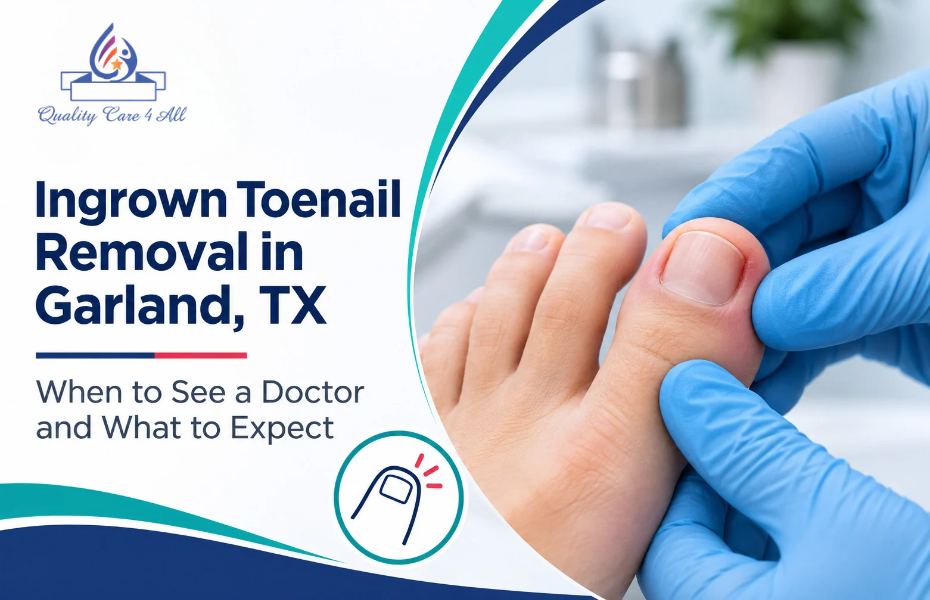
An ingrown toenail can start as a small area of tenderness but gradually become painful enough to affect walking, exercise, and everyday activities. Wearing closed-toe shoes, standing for long periods, or putting pressure on the affected toe may become uncomfortable. When redness, swelling, or drainage develops, it is important to understand what may be causing the problem and when to seek medical attention.
If you are searching for ingrown toenail removal in Garland, learning about the symptoms, causes, treatment options, and recovery process can help you make an informed decision. Some mild cases may improve with conservative care, while persistent or more complicated cases may require professional treatment.
For people in Garland, Texas, Texans Health and Wellness Center is a local healthcare resource offering minor procedure services. Patients can contact the clinic to ask about ingrown toenail evaluation and whether an in-office procedure may be appropriate for their situation.
What Does Professional Ingrown Toenail Removal in Garland Involve?
Professional ingrown toenail removal starts with an examination of the affected toe. Depending on the severity, a healthcare provider may recommend conservative treatment or remove the nail edge under local anesthetic. Medical evaluation is important for persistent pain, worsening swelling, drainage, recurring problems, or symptoms that may indicate infection.
What Is an Ingrown Toenail?
An ingrown toenail develops when the side or corner of a toenail grows into the surrounding skin rather than extending naturally beyond the toe. The nail edge can irritate the nearby tissue, leading to tenderness, redness, swelling, and pain.
The big toe is commonly affected, although an ingrown toenail can develop on other toes as well.
A healthy toenail generally grows forward over the skin at the tip of the toe. However, certain nail shapes, trimming habits, injuries, and footwear can cause the nail edge to press into the surrounding skin.
Mild irritation versus possible infection
Not every ingrown toenail is infected. Symptoms can range from mild irritation to more significant inflammation.
- Mild irritation: The skin beside the nail may feel tender or appear slightly red.
- Increased inflammation: Swelling and pain may become more noticeable, especially when wearing shoes or walking.
- Possible infection: Pus, drainage, warmth, increasing redness, or worsening tenderness may indicate an infection.
An infected ingrown toenail should be evaluated by a healthcare professional. The appropriate treatment depends on the examination and whether infection has spread beyond the immediate nail area.
What Causes Ingrown Toenails?
Several everyday habits and physical factors can contribute to ingrown toenails. Understanding these causes may help reduce the risk of recurring problems.
Improper toenail trimming
Cutting toenails too short or rounding their corners can encourage the nail edge to grow into the surrounding skin. Repeatedly digging into the corners may also leave a sharp nail edge that irritates nearby tissue.
Tight-fitting shoes
Shoes that squeeze the toes can place continuous pressure on the nail and surrounding skin. Narrow dress shoes, tight athletic footwear, and shoes without enough room around the toes may contribute to the problem.
Repeated pressure or toe injuries
Repeated pressure from walking, running, or playing sports may irritate the nail area. Direct injuries, such as stubbing a toe or dropping something on it, can also contribute to nail problems.
Naturally curved toenails
Some people naturally have toenails that curve more sharply toward the surrounding skin. This nail shape may increase the likelihood of developing recurring ingrown toenails.
Sports and physical activities
Athletes and physically active individuals may experience repeated pressure on their toes. Running, kicking, sudden direction changes, and poorly fitting sports shoes may contribute to irritation around the nail.
Other contributing factors
Additional factors may include excessive sweating, poor nail-care habits, repeated irritation around the nail fold, and certain nail abnormalities.
Identifying possible contributing factors can help guide treatment and prevention.
What Are the Common Symptoms of an Ingrown Toenail?
Ingrown toenail symptoms can range from mild tenderness to significant pain and inflammation.
Common symptoms include:
- Pain along one or both sides of the toenail.
- Redness around the nail edge.
- Swelling of the surrounding skin.
- Tenderness when touching the affected area.
- Discomfort while wearing shoes.
- Irritated or raised skin beside the nail.
- Difficulty walking when symptoms become more severe.
How can you recognize an infected ingrown toenail?
An infected ingrown toenail may cause additional symptoms, such as:
- Pus or cloudy fluid draining from the affected area.
- Increasing warmth around the toe.
- Worsening swelling and redness.
- Increasing pain or tenderness.
- More pronounced skin changes around the nail.
Drainage, worsening redness, and increasing pain deserve medical attention. Redness spreading beyond the immediate nail area, fever, or rapidly worsening symptoms require urgent medical evaluation.
Avoid attempting to squeeze or drain the affected area yourself.
When Should I See a Doctor for an Ingrown Toenail?
You should consider seeing a healthcare professional when an ingrown toenail causes persistent pain, increasing inflammation, drainage, or difficulty walking. Medical evaluation is also appropriate when the condition repeatedly returns or does not improve with appropriate basic care.
Consider arranging an examination if you experience:
Persistent or worsening pain: Pain that continues despite reducing pressure on the toe may indicate that the nail edge is irritating the surrounding tissue.
Increasing redness or swelling: Progressively inflamed skin around the toenail may require professional assessment.
Pus or drainage: Drainage can indicate a possible infection. A healthcare provider can assess whether treatment beyond basic nail care is needed.
Repeated ingrown toenails: Recurring problems may require a different approach to nail management. A provider can evaluate whether a procedure or specialist referral is appropriate.
Difficulty walking: When toenail pain affects walking, footwear, exercise, or daily activities, professional assessment may help identify the cause and suitable treatment.
Symptoms that do not improve: If appropriate basic care does not help or symptoms become worse, avoid repeatedly trying home remedies.
Who should seek medical advice early?
People with certain medical conditions should not attempt to manage an ingrown toenail independently. These include individuals with:
- Diabetes.
- Poor circulation.
- Reduced sensation in their feet.
- Peripheral neuropathy.
- Compromised immune systems.
These conditions can increase the risk of complications or make it harder to recognize worsening tissue problems. Even a small toe injury may require careful medical attention.
Important: Seek urgent medical care if you develop fever, spreading redness, rapidly increasing swelling, severe worsening pain, or other signs of a potentially progressing infection.
Can Mild Ingrown Toenails Be Treated at Home?
Mild ingrown toenails without significant swelling, drainage, or signs of infection may improve with conservative home care. The goal is to reduce pressure, keep the affected area clean, and allow the nail to grow naturally.
Warm water soaks
Soaking the affected foot in warm, soapy water for approximately 10–20 minutes, three to four times daily, may help ease irritation. After soaking, dry the foot thoroughly, including between the toes.
Wear comfortable footwear
Choose shoes with a wide toe box that allow your toes to move comfortably. Open-toe footwear may also reduce pressure when appropriate.
Keep the affected area clean and dry
Maintain good foot hygiene and avoid excessive moisture. Clean, dry feet support healthy skin and nail care.
Avoid unnecessary pressure
Temporarily reduce activities that place repeated pressure on the affected toe. If walking or exercise increases pain, modify those activities until the toe improves.
Practice proper nail care
When trimming nails is appropriate, cut straight across rather than rounding the corners. Avoid cutting the nail excessively short.
What should you avoid doing at home?
Certain self-treatment methods can make the problem worse.
- Do not dig deeply under the toenail.
- Do not cut out the ingrown nail corner yourself.
- Do not use sharp tools to remove embedded nail sections.
- Do not attempt to squeeze or drain an infected area.
- Do not ignore increasing pain, swelling, or redness.
Home treatment is not appropriate for everyone. People with diabetes, reduced foot sensation, poor circulation, or suspected infection should seek medical guidance rather than attempting self-treatment.
If symptoms persist or worsen, a healthcare provider can determine whether professional ingrown toenail treatment is necessary.
How Is an Ingrown Toenail Removed by a Doctor?
Professional Ingrown Toenail Removal in Garland may be considered when conservative treatment does not provide sufficient relief or when the condition is more advanced. The exact approach depends on the severity of the ingrown nail, inflammation, possible infection, previous episodes, and the patient’s overall health.
Not every patient needs nail removal. Some mild cases can be managed with conservative treatment.
Step 1: Initial examination
The healthcare provider examines the affected toe and asks about:
- How long symptoms have been present.
- Whether the pain is getting worse.
- Previous ingrown toenail episodes.
- Drainage or other possible infection symptoms.
- Existing medical conditions.
- Medications and relevant allergies.
The examination helps determine the extent of inflammation and whether a procedure may be appropriate.
Step 2: Assessment of inflammation and possible infection
The provider evaluates the skin around the nail, looking for redness, swelling, tenderness, drainage, and other signs that may suggest infection.
The provider also considers whether another condition could be causing similar symptoms.
Step 3: Discussion of treatment options
Depending on the findings, treatment may involve conservative nail management, partial nail removal, or referral to a specialist.
For recurring ingrown toenails, a procedure involving part of the nail’s growth area may also be considered.
Step 4: Cleaning and preparation
If a procedure is appropriate, the affected area is cleaned and prepared using suitable clinical techniques. The provider explains the procedure and discusses expected discomfort, potential risks, and aftercare.
Step 5: Administration of local anesthetic
When nail removal is necessary, a local anesthetic may be injected around the affected toe to temporarily numb the area.
This helps reduce pain during the procedure. Patients may still feel pressure or movement even after the area becomes numb.
Step 6: Partial nail removal
One common approach is called partial nail avulsion.
During this procedure, the healthcare provider removes the problematic section of the toenail rather than automatically removing the entire nail. The purpose is to eliminate the nail edge that is pressing into the surrounding skin.
Partial nail removal may be suitable when the ingrown section is causing persistent pain, inflammation, or recurring problems.
Step 7: Management of the nail growth area when necessary
In selected recurring cases, the provider may consider treating a portion of the nail matrix, which is the tissue responsible for nail growth.
This procedure is called a matrixectomy. It may involve removing or treating part of the nail’s growth area to reduce the likelihood of the same nail edge growing inward again.
Whether this additional treatment is appropriate depends on individual clinical findings.
Step 8: Application of a dressing
After the procedure, the affected area is cleaned as appropriate and covered with a suitable dressing. The dressing helps protect the treated area while healing begins.
Step 9: Wound-care instructions and follow-up
Patients receive instructions about:
- Keeping the toe clean.
- Changing the dressing.
- Managing discomfort.
- Choosing appropriate footwear.
- Limiting activities when necessary.
- Recognizing possible infection.
- Returning for follow-up if recommended.
A healthcare provider should explain what to expect during recovery and when to seek additional care.
Does every ingrown toenail require partial nail removal?
No. Treatment depends on the severity and clinical presentation. Some cases respond to conservative measures, while more persistent or complicated cases may require a minor procedure.
Does Ingrown Toenail Removal Hurt?
Ingrown Toenail Removal in Garland may involve some discomfort, particularly when local anesthetic is administered. However, the anesthetic helps numb the affected area and reduce pain during the procedure.
Here is what patients may generally experience:
- During the numbing process: The injection may cause brief stinging, pressure, or discomfort.
- During nail removal: Once the anesthetic takes effect, patients should experience reduced pain. They may still notice pressure, movement, or pulling sensations.
- After the procedure: Some tenderness, mild swelling, or discomfort may occur as the anesthetic wears off.
The level of discomfort varies depending on the severity of the condition, the procedure performed, and individual pain sensitivity.
Patients should tell their healthcare provider if they experience sharp pain during the procedure or severe, unexpected pain afterward.
No responsible provider should guarantee a completely painless experience. Appropriate pain management and clear communication can make the process more manageable.
What Is the Recovery Time After Ingrown Toenail Removal?
Recovery after ingrown toenail removal varies from person to person. The type of procedure, extent of inflammation, infection, and individual healing ability all influence recovery.
Some patients return to light daily activities relatively soon, while others need additional time before resuming exercise or activities that place pressure on the toe.
What happens immediately after the procedure?
Your provider may recommend resting and elevating the affected foot during the initial recovery period. You may also receive instructions about keeping the dressing in place and avoiding unnecessary pressure on the toe.
Dressing changes and wound care
Follow the specific dressing instructions provided by your healthcare professional.
Depending on the procedure, you may need to:
- Change the dressing at the recommended time.
- Keep the affected area clean.
- Avoid soaking the toe unless instructed.
- Wear comfortable footwear.
- Monitor for unusual drainage or increasing redness.
Returning to normal activities
Walking may be possible after some procedures, but activity should depend on comfort and the provider’s recommendations.
| Activity | General recovery consideration |
|---|---|
| Walking | Resume according to comfort and medical instructions |
| Wearing shoes | Choose footwear that does not press on the treated toe |
| Driving | Consider whether pain, dressing, or the treated foot affects safe vehicle control |
| Exercise | Avoid activities that cause toe pain or pressure |
| Sports | Return when healing allows and the provider considers it appropriate |
| Swimming | Avoid until the treated area has healed sufficiently and your provider approves |
What are signs of delayed healing?
Contact your healthcare provider if you notice:
- Increasing rather than improving pain.
- Redness spreading around the toe.
- Worsening swelling.
- New or increasing pus drainage.
- Fever or feeling unwell.
- A wound that does not appear to be healing as expected.
Do not assume that every instance of drainage means infection, because some procedures can produce temporary wound discharge. Your provider can help distinguish expected healing from concerning changes.
Recovery instructions should always be individualized rather than based on a fixed timeline.
What Is the Difference Between Home Treatment and Professional Removal?
Home care and professional treatment serve different purposes. Home care may be appropriate for mild symptoms, while professional treatment provides an opportunity to evaluate persistent, recurrent, or complicated problems.
| Factor | Home Care | Professional Treatment |
|---|---|---|
| Suitable situations | Mild symptoms without infection | Persistent, recurrent, or complicated cases |
| Assessment | Self-observation | Clinical examination |
| Nail management | Basic nail care | Procedure when indicated |
| Infection evaluation | Limited | Professional assessment |
| Anesthesia | Not applicable | May involve local anesthetic |
| Aftercare | General foot hygiene | Individualized wound-care instructions |
The main difference is that professional care allows a healthcare provider to examine the nail and determine whether a procedure or additional treatment is appropriate.
Home treatment should not delay medical evaluation when symptoms are worsening or when a patient has a higher-risk medical condition.
Can a Family Doctor Remove an Ingrown Toenail?
Yes, some family medicine providers perform minor procedures, including selected ingrown toenail treatments. However, procedural availability depends on the provider’s training, clinical judgment, and the patient’s individual condition.
A family doctor may be able to:
- Examine the affected toenail.
- Assess pain, inflammation, and possible infection.
- Recommend conservative treatment.
- Discuss whether partial nail removal may be appropriate.
- Determine whether referral to a podiatrist is necessary.
More complicated cases, significant infections, recurring nail problems, or certain underlying medical conditions may require specialist evaluation.
What should you ask before scheduling?
If you are searching online for an ingrown toenail doctor near me, consider asking:
- Does the practice evaluate ingrown toenails?
- Are in-office toenail procedures available?
- Does the provider perform partial nail removal when appropriate?
- What happens if the condition requires specialist care?
- What are the consultation and procedure costs?
- Are follow-up appointments recommended?
These questions can help you understand whether the practice is suitable for your needs.
Texans Health and Wellness Center in Garland is a local healthcare resource offering minor procedure services. Patients can contact the clinic to ask about ingrown toenail evaluation and whether their particular condition may be appropriate for care.
Learn more about the clinic’s Medical Services and other available minor procedures.
For additional information about the healthcare center, visit About Texans Health and Wellness Center.
What Does Ingrown Toenail Removal in Garland Cost?
The cost of Ingrown Toenail Removal in Garland can vary depending on the patient’s condition, the procedure performed, and the healthcare setting. There is no single price that applies to every patient.
Several factors may influence the total cost:
Severity of the condition: A mild ingrown toenail may require a different approach from a severely inflamed or recurring problem.
Type of procedure: Conservative treatment, partial nail removal, and procedures involving the nail matrix may have different costs.
Additional treatment: If further evaluation or treatment is needed for an infection or another condition, expenses may increase.
Consultation fees: The initial medical examination may be billed separately from the procedure.
Insurance coverage: Coverage depends on the patient’s individual plan, medical necessity requirements, network status, and applicable benefits.
Follow-up appointments: Additional visits or wound assessments may affect the overall expense.
Before scheduling, ask the clinic about consultation fees, potential procedure costs, and accepted payment arrangements. You should also contact your insurance provider to confirm your individual coverage.
Texans Health and Wellness Center can be contacted directly for current information about appointments and relevant service costs.
Why Consider Professional Ingrown Toenail Treatment in Garland, TX?
When toenail pain becomes persistent, finding an appropriate healthcare provider close to home can make seeking care more convenient.
For individuals looking for ingrown toenail removal in Garland, TX, Texans Health and Wellness Center is a local healthcare resource where patients can ask about minor procedures and discuss their concerns.
Texans Health and Wellness Center
The center is located at:
4125 Broadway Blvd, Garland, TX 75043, United States
Phone: (972) 303-0861
Website: Texans Health and Wellness Center
The clinic’s Medical Services include a range of minor procedures, such as:
- Trigger Point Injections.
- Joint Injections.
- Ingrown Toenail Removal.
- Sutures and Suture Removal.
- Abscess Incision and Drainage.
- Wart and Skin Tag Removal.
The availability and suitability of a particular procedure should be confirmed with the clinic.
Every ingrown toenail is different. Some patients may benefit from conservative treatment, while others may need a procedure or referral to a specialist. The appropriate next step depends on an individual medical assessment rather than symptoms alone.
Patients interested in learning more about the provider can visit the Dr Jaye Krubally profile.
For readers exploring other minor outpatient treatments, the clinic also provides information about Minor Procedures and Skin Tag Removal in Texas.
Considering an appointment?
If you have persistent toenail pain, recurring swelling, or concerns about a possible infection, consider discussing your symptoms with a healthcare professional. Contact the clinic to confirm whether an evaluation or in-office toenail procedure may be appropriate.
How Can You Prevent Ingrown Toenails From Returning?
Preventing ingrown toenails begins with proper nail care, suitable footwear, and reducing repeated pressure on the toes. Although prevention cannot eliminate every risk, these habits may help reduce recurring problems.
Trim toenails straight across
Cut toenails straight across rather than rounding or digging into the corners. Avoid cutting them too short. Leaving the nail at approximately the level of the toe tip helps reduce the chance of the surrounding skin growing over the nail edge.
Choose properly fitting footwear
Wear shoes that provide enough space around the toes. Avoid narrow or tight footwear that repeatedly presses against the big toenail.
Maintain good foot hygiene
Wash your feet regularly and dry them thoroughly, including between the toes. Keeping feet clean and dry supports healthy skin and nail care.
Protect your toes from injury
Use appropriate footwear during sports, exercise, and activities that may expose your toes to repeated pressure or injury.
Monitor recurring nail problems
If the same toenail repeatedly becomes painful or inflamed, seek professional evaluation rather than repeatedly cutting away the affected corner. A provider may help identify contributing factors and discuss whether additional treatment is appropriate.
Establish a consistent nail-care routine
Use clean, suitable nail clippers and avoid tearing or picking at nail edges. People who have difficulty trimming their toenails safely should ask a healthcare professional about appropriate foot-care options.
These preventive steps are especially important for people who have experienced multiple ingrown toenails.
FAQs About Ingrown Toenail Removal in Garland
The appropriate way to remove an ingrown toenail depends on its severity. Mild cases may improve with warm water soaks, comfortable footwear, and proper nail care. Persistent or complicated cases may require professional treatment, such as partial nail removal under local anesthetic. Avoid digging into the nail or cutting out embedded sections yourself.
You should not attempt to surgically remove an ingrown toenail yourself. For mild cases without infection or higher-risk medical conditions, conservative care may help. This can include warm water soaks, keeping the toe clean and dry, and wearing roomy shoes. Seek professional care if pain, swelling, or redness continues.
For a mild ingrown toenail, soaking the affected foot in warm, soapy water for 10–20 minutes several times daily may help relieve irritation. Keep the foot dry afterward and avoid tight shoes. Do not cut deeply into the nail corner, use sharp tools, or attempt to drain pus. Seek medical advice if symptoms worsen.
A doctor first examines the toe and evaluates inflammation, pain, and possible infection. If removal is appropriate, the provider may inject a local anesthetic to numb the toe before removing the problematic nail edge. A dressing is then applied, and the patient receives instructions for wound care and recovery.
See a healthcare professional if you experience persistent pain, increasing redness, swelling, drainage, or repeated ingrown toenails. Medical evaluation is particularly important if walking becomes difficult. People with diabetes, poor circulation, reduced foot sensation, or weakened immune systems should seek medical guidance early rather than attempting home treatment.
Final Thoughts: Get the Right Care for an Ingrown Toenail Removal in Garland
An ingrown toenail can begin with mild tenderness but gradually develop into a more uncomfortable problem. Persistent pain, swelling, redness, and drainage should not be ignored.
Early attention can help identify the severity of the condition and determine whether conservative care, partial nail removal, or another treatment approach is appropriate.
Remember these important points:
- Maintain proper toenail hygiene and trim nails straight across.
- Avoid tight-fitting shoes that place pressure on your toes.
- Do not attempt invasive nail removal at home.
- Seek professional evaluation for persistent or worsening symptoms.
- Get medical advice early if you have diabetes or circulation problems.
- Follow appropriate wound-care instructions after a procedure.
Looking for Ingrown Toenail Removal in Garland, TX?
If you are experiencing persistent toenail pain, swelling, or recurring ingrown toenails, consider discussing your symptoms with a healthcare professional.
Texans Health and Wellness Center offers minor procedure services in Garland, Texas. Contact the clinic to ask about ingrown toenail evaluation, procedural availability, and whether an appointment may be appropriate for your condition.
Texans Health and Wellness Center
4125 Broadway Blvd, Garland, TX 75043, United States
Phone: (972) 303-0861
Website: texanshealthandwellness.com
Whether you are experiencing a first-time ingrown toenail or recurring discomfort, an appropriate medical assessment can help you understand your options and take an informed next step.
Contact Us: Texans Health and Wellness in Texas