
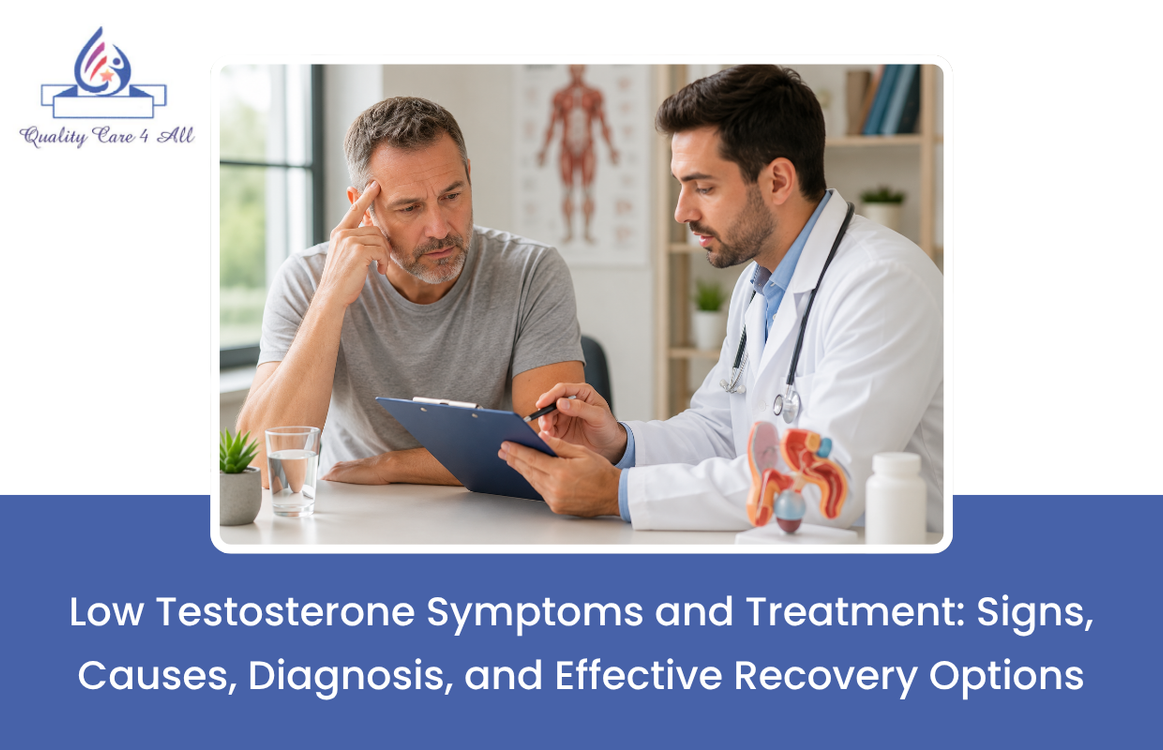
Low Testosterone Symptoms and Treatment involves recognizing symptoms such as fatigue, low libido, muscle loss, weight gain, mood changes, and brain fog, followed by a comprehensive medical evaluation. Treatment may include testosterone replacement therapy (TRT), testosterone injection therapy, healthy lifestyle changes, and ongoing hormone monitoring to safely restore hormone balance and improve overall health.
Feeling exhausted even after a full night’s sleep? Struggling with low motivation, weight gain, reduced muscle strength, or a declining sex drive? While many men assume these changes are simply part of aging, they may actually be signs of low testosterone or another hormonal imbalance.
Testosterone is one of the body’s most important hormones. It influences everything from energy production and metabolism to muscle growth, bone strength, mood, concentration, and sexual health. When testosterone levels fall below a healthy range, it can affect nearly every aspect of daily life.
The encouraging news is that low testosterone symptoms are treatable. With proper testing, an accurate diagnosis, and a personalized treatment plan, many people experience meaningful improvements in energy, mental clarity, physical performance, and overall well-being.
At Texans Health and Wellness Center, our healthcare team focuses on identifying the root cause of hormonal imbalance—not simply treating symptoms. Every patient receives an individualized hormone evaluation to determine the safest and most effective treatment based on their medical history, hormone levels, and personal health goals.
Whether you’re searching for Low Testosterone Treatment in Texas, Hormonal Imbalance Treatment in Garland, or answers about low testosterone symptoms, this comprehensive guide will help you understand the causes, diagnosis, treatment options, and recovery process.
What Is Low Testosterone?
Low testosterone, also known as testosterone deficiency or male hypogonadism, is a condition in which the body does not produce enough testosterone to maintain normal physical and mental function.
Testosterone is produced primarily in the testicles and plays a critical role in:
- Muscle development
- Bone strength
- Fat distribution
- Energy production
- Mood regulation
- Memory and concentration
- Red blood cell production
- Sexual desire
- Erectile function
- Healthy aging
Although testosterone levels naturally decline with age, a significant drop is not something that should be ignored. Persistent symptoms often indicate an underlying hormonal issue that deserves professional evaluation.
Without proper treatment, testosterone deficiency may contribute to decreased quality of life and increase the risk of metabolic and cardiovascular health concerns.
Schedule Your Hormone Evaluation: If you’re experiencing persistent fatigue, low libido, or unexplained muscle loss, explore our Medical Services to learn about comprehensive hormone evaluations and personalized treatment options.
What Is Hormonal Imbalance?
Hormones are chemical messengers that coordinate many essential body functions. They regulate metabolism, growth, sleep, reproduction, stress response, mood, and energy levels.
A hormonal imbalance occurs when one or more hormones are either too high or too low. Even small changes can have noticeable effects on how you feel every day.
While this article focuses on testosterone, hormone health is interconnected. Other hormones that influence overall wellness include:
- Testosterone
- Estrogen
- Thyroid hormones
- Cortisol
- Insulin
- Growth hormone
Because hormones work together, an imbalance in one hormone can affect several body systems.
For example, low testosterone may contribute to:
- Reduced metabolism
- Weight gain
- Insulin resistance
- Poor sleep quality
- Mood changes
- Decreased exercise performance
Hormonal imbalances can also affect women. If you’d like to learn more about female hormone health, read our article on Low Estrogen Symptoms to better understand how balanced hormones support long-term wellness.
Early Signs and Symptoms of Low Testosterone Symptoms
Many symptoms of testosterone deficiency develop gradually, making them easy to overlook. Recognizing these early warning signs can help you seek treatment before they significantly impact your health.
1. Low Energy
Feeling tired all day despite getting enough sleep is one of the most common symptoms of Low Testosterone Symptoms.
Many men notice:
- Reduced stamina
- Difficulty completing daily tasks
- Less motivation
- Poor workout performance
Unlike normal fatigue, hormone-related low energy often persists for weeks or months.
2. Chronic Fatigue
Persistent exhaustion that doesn’t improve with rest may indicate an underlying hormone imbalance.
People often describe feeling:
- Physically drained
- Mentally exhausted
- Less productive at work
- Unable to recover after exercise
3. Low Libido
A noticeable decline in sexual desire is one of the hallmark signs of testosterone deficiency.
Low testosterone may reduce:
- Sexual interest
- Intimacy
- Overall sexual satisfaction
While libido naturally changes over time, a sudden or significant decrease should be evaluated by a healthcare provider.
4. Erectile Dysfunction
Although erectile dysfunction has many possible causes, low testosterone can contribute to:
- Difficulty achieving erections
- Reduced firmness
- Less frequent morning erections
- Lower sexual performance
A complete evaluation helps determine whether hormonal imbalance, cardiovascular disease, diabetes, medication side effects, or other health conditions are involved.
5. Reduced Muscle Mass
Testosterone plays a key role in maintaining lean muscle tissue.
When hormone levels decline, many men experience:
- Loss of strength
- Smaller muscle size
- Difficulty building muscle
- Slower exercise recovery
6. Increased Body Fat
Many individuals notice that losing weight becomes more difficult.
Common changes include:
- Increased abdominal fat
- Slower metabolism
- Weight gain despite healthy eating
- Reduced physical endurance
Hormonal imbalance can make traditional diet and exercise efforts less effective without addressing the underlying cause.
7. Mood Changes
Testosterone influences emotional well-being.
Lower hormone levels may contribute to:
- Irritability
- Mood swings
- Reduced motivation
- Lack of confidence
Many patients report feeling “not like themselves” long before recognizing that hormones may be involved.
8. Depression
Some men experience symptoms that resemble clinical depression, including:
- Persistent sadness
- Loss of interest in hobbies
- Social withdrawal
- Reduced enjoyment of daily life
Because these symptoms can have many causes, professional evaluation is essential before starting any treatment.
9. Anxiety
Hormonal changes may also affect stress response and emotional balance.
Symptoms can include:
- Increased nervousness
- Feeling overwhelmed
- Difficulty relaxing
- Poor stress tolerance
Addressing hormone deficiencies may improve overall emotional health when combined with appropriate medical care.
10. Brain Fog
Brain fog is a common but often overlooked symptom of testosterone deficiency.
Many patients describe:
- Forgetfulness
- Mental fatigue
- Slower thinking
- Difficulty making decisions
11. Poor Concentration
Low testosterone can affect cognitive performance at work and home.
You may notice:
- Difficulty focusing
- Reduced productivity
- Trouble completing tasks
- Poor memory retention
12. Sleep Problems
Sleep and testosterone have a close relationship.
Low testosterone may contribute to:
- Difficulty falling asleep
- Frequent nighttime waking
- Poor sleep quality
- Feeling tired despite adequate sleep
At the same time, chronic sleep deprivation can further lower testosterone levels, creating a cycle that’s difficult to break without treatment.
Book Your Testosterone Consultation: If you’re experiencing several of these symptoms, don’t assume they’re just part of aging. Visit Texans Health and Wellness Center to schedule a personalized hormone evaluation and discuss treatment options tailored to your needs.
Common Hormonal Imbalance Symptoms
Hormonal imbalance affects both men and women, although symptoms vary depending on which hormones are involved.
Symptoms in Men
- Low libido
- Erectile dysfunction
- Chronic fatigue
- Weight gain
- Reduced muscle mass
- Brain fog
- Depression
- Anxiety
- Hot flashes
- Decreased facial or body hair
- Poor exercise recovery
- Reduced stamina
Symptoms in Women
Hormonal imbalances can also affect women and may include:
- Irregular menstrual cycles
- Mood swings
- Fatigue
- Weight gain
- Sleep disturbances
- Hot flashes
- Vaginal dryness
- Low libido
- Hair thinning
- Difficulty concentrating
Because these symptoms overlap with many medical conditions, a comprehensive hormone evaluation is the most reliable way to determine the underlying cause and create an appropriate treatment plan.
What Causes Low Testosterone?
Low testosterone can result from a combination of aging, medical conditions, lifestyle habits, and hormone-regulating disorders. Understanding the cause is essential because treatment plans vary depending on each person’s health history and hormone levels.
Identifying the root cause of low testosterone is one of the most important steps toward effective treatment. At Texans Health and Wellness Center, providers perform comprehensive evaluations because testosterone deficiency can have more than one contributing factor.
1. Aging
Testosterone levels naturally decline by about 1% per year after age 30 for many men. While this gradual decrease is normal, significant symptoms that interfere with daily life should be medically evaluated rather than accepted as a normal part of aging.
2. Obesity
Excess body fat, especially around the abdomen, can lower testosterone production. Obesity also increases inflammation and insulin resistance, both of which may negatively affect hormone balance.
3. Diabetes
Men with Type 2 diabetes are more likely to experience low testosterone. Poor blood sugar control can interfere with hormone production and contribute to fatigue, weight gain, and reduced sexual function.
4. Chronic Stress
Long-term stress raises cortisol levels. Elevated cortisol may suppress testosterone production and contribute to fatigue, anxiety, and reduced muscle mass.
5. Sleep Disorders
Quality sleep is essential for hormone production. Conditions such as sleep apnea, insomnia, or chronic sleep deprivation can significantly reduce testosterone levels.
6. Certain Medications
Some medications may affect hormone production, including:
- Long-term opioid pain medications
- Corticosteroids
- Certain chemotherapy medications
- Some hormone therapies
Never stop taking prescribed medications without consulting your healthcare provider.
7. Pituitary Disorders
The pituitary gland controls hormone production throughout the body. Disorders affecting this gland may reduce signals that stimulate testosterone production.
8. Testicular Conditions
Previous injury, infection, surgery, or certain inherited conditions involving the testicles can reduce testosterone production.
9. Lifestyle Factors
Everyday habits can also influence hormone health, including:
- Poor nutrition
- Lack of exercise
- Smoking
- Excessive alcohol consumption
- Chronic stress
- Inadequate sleep
Many of these factors can improve with personalized lifestyle changes alongside medical treatment.
✔ Restore Your Energy Naturally
If you’re experiencing persistent symptoms, schedule a comprehensive hormone evaluation through Medical Services to identify the underlying cause and receive a personalized treatment plan.
How Is Low Testosterone Diagnosed?
A proper diagnosis goes beyond checking one testosterone level. Because hormone levels naturally fluctuate throughout the day, a complete evaluation is essential.
Medical History
Your healthcare provider will discuss:
- Current symptoms
- Medical conditions
- Medications
- Sleep habits
- Exercise routine
- Family history
- Sexual health
Physical Examination
A physical exam may include evaluation of:
- Body composition
- Muscle strength
- Blood pressure
- Body hair distribution
- Testicular health
Blood Tests
Morning blood tests typically provide the most accurate testosterone measurements.
Testing may include:
- Total Testosterone
- Free Testosterone
- LH (Luteinizing Hormone)
- FSH (Follicle Stimulating Hormone)
- Estradiol
- Thyroid Function Tests
- PSA (when appropriate)
- Complete Blood Count (CBC)
Hormone Panel
A complete hormone panel helps identify whether symptoms are caused by testosterone deficiency or another hormonal imbalance.
Follow-Up Testing
If testosterone levels are low, providers often repeat testing on a different day before confirming the diagnosis. This helps ensure accuracy and prevents unnecessary treatment.
Treatment decisions should always be based on symptoms, laboratory results, medical history, and overall health—not testosterone numbers alone.
Testosterone Replacement Therapy (TRT)
Testosterone Replacement Therapy (TRT) is a medical treatment designed to restore testosterone levels to a healthy range in individuals with confirmed testosterone deficiency.
TRT is not appropriate for everyone. A qualified healthcare provider should determine whether it is suitable based on hormone testing, symptoms, medical history, and treatment goals.
Who Is a Candidate?
You may be a candidate for TRT if you have:
- Persistent symptoms of Low Testosterone Symptoms
- Confirmed low testosterone levels on laboratory testing
- No medical conditions that make TRT unsafe
- Realistic expectations regarding treatment
Potential Benefits
Many patients experience improvements such as:
- Increased energy
- Better mood
- Improved libido
- Enhanced muscle strength
- Better exercise performance
- Improved bone health
- Better concentration
- Improved quality of life
Results vary from person to person.
Possible Risks
Like any medical treatment, TRT has potential risks and requires ongoing medical supervision.
Potential considerations include:
- Increased red blood cell count
- Acne
- Fluid retention
- Fertility changes
- Need for ongoing monitoring
Your provider will discuss these risks in detail before treatment begins.
Ongoing Monitoring
Routine follow-up appointments help ensure treatment remains safe and effective.
Monitoring may include:
- Testosterone levels
- Blood counts
- PSA testing (when appropriate)
- Blood pressure
- Symptom improvement
- Treatment adjustments
✔ Book Your Testosterone Consultation
If you believe TRT may be right for you, the experienced team at Texans Health and Wellness Center can help determine whether you’re an appropriate candidate.
Testosterone Injection Therapy
One of the most common forms of testosterone replacement is Testosterone Injection Therapy.
At Texans Health and Wellness Center, testosterone injections are provided as part of an individualized treatment plan based on comprehensive hormone evaluation.
How It Works
Testosterone injections replace deficient hormone levels, helping restore normal body function over time.
Treatment schedules vary depending on:
- Hormone levels
- Medical history
- Response to therapy
- Individual goals
Potential Benefits
Many patients report:
- Increased energy
- Improved libido
- Better mood
- Increased muscle mass
- Better exercise recovery
- Improved confidence
- Enhanced mental clarity
Is It Safe?
When prescribed and monitored by qualified healthcare professionals, testosterone injection therapy can be a safe treatment option for appropriate candidates.
Regular monitoring helps minimize potential risks while maximizing treatment benefits.
Benefits of Hormonal Imbalance Treatment
Personalized hormone therapy focuses on improving overall wellness rather than simply increasing testosterone levels.
Potential benefits include:
Increased Energy
Many patients feel less fatigued and more productive throughout the day.
Improved Mood
Balanced hormones may contribute to better emotional well-being and reduced irritability.
Better Sleep
Improved hormone balance often supports healthier sleep patterns.
Increased Muscle Strength
Combined with exercise, treatment may support improved muscle maintenance and recovery.
Better Metabolism
Hormone optimization may help support healthy metabolic function.
Healthy Weight Management
Many patients find it easier to maintain a healthy weight alongside proper nutrition and exercise.
Improved Sexual Health
Restoring healthy testosterone levels may improve libido and sexual function for appropriate candidates.
Better Cognitive Function
Many individuals notice improvements in focus, memory, and mental clarity after hormone optimization.
✔ Start Your Personalized Hormone Health Journey
Personalized care begins with understanding your unique hormone profile. Schedule an evaluation today to learn which treatment options may be right for you.
Lifestyle Changes That Support Healthy Testosterone
Medical treatment works best when combined with healthy lifestyle habits.
Nutrition
Choose a balanced diet rich in:
- Lean protein
- Fruits
- Vegetables
- Whole grains
- Healthy fats
Exercise
Regular physical activity supports hormone health and overall wellness.
Aim for at least 150 minutes of moderate exercise each week.
Strength Training
Resistance training is especially beneficial for maintaining muscle mass and supporting healthy testosterone levels.
Prioritize Sleep
Adults should aim for approximately 7–9 hours of quality sleep each night.
Manage Stress
Healthy stress management techniques include:
- Meditation
- Deep breathing
- Walking
- Yoga
- Mindfulness
Maintain a Healthy Weight
Achieving and maintaining a healthy body weight may help improve hormone balance.
Limit Alcohol
Excessive alcohol consumption can negatively affect testosterone production.
Quit Smoking
Smoking impacts circulation, hormone health, and overall wellness.
Testosterone Replacement Therapy vs Lifestyle Changes
| Feature | Testosterone Replacement Therapy (TRT) | Lifestyle Changes |
|---|---|---|
| Purpose | Restore testosterone levels | Support natural hormone health |
| Best For | Confirmed testosterone deficiency | Everyone |
| Medical Supervision | Required | Recommended |
| Blood Testing | Yes | Not usually |
| Time to Notice Results | Several weeks to months | Gradual improvements |
| Improves Hormone Levels | Directly | May support naturally |
| Exercise Required | Recommended | Essential |
| Long-Term Health Benefits | When medically appropriate | Significant overall health benefits |
| Personalized Plan | Yes | Yes |
For many individuals, the best results come from combining medically supervised treatment with healthy lifestyle habits.
When Should You See a Hormone Specialist?
Consider scheduling an evaluation if you experience:
- Persistent fatigue
- Low libido
- Erectile dysfunction
- Brain fog
- Difficulty building muscle
- Unexplained weight gain
- Mood changes
- Poor concentration
- Sleep problems
Early diagnosis can help identify hormone deficiencies before they significantly affect long-term health.
Residents searching for Low Testosterone Symptoms & Treatment in Garland, Men’s Hormone Health in Dallas, Hormonal Health in Fort Worth, or a Testosterone Clinic Near Me can benefit from a professional hormone evaluation tailored to their needs.
Real-Life Patient Success Story
Michael, a 48-year-old business owner from Garland, had been struggling with fatigue, weight gain, poor sleep, and a declining sex drive for nearly two years. He assumed these changes were simply part of getting older.
After visiting Texans Health and Wellness Center, he underwent a comprehensive hormone evaluation that confirmed low testosterone.
His personalized care plan included:
- Testosterone Injection Therapy
- Nutrition counseling
- Strength training recommendations
- Sleep improvement strategies
- Routine hormone monitoring
Over the following months, Michael reported:
- Improved energy
- Better focus at work
- Increased muscle strength
- Better sleep
- Healthier body composition
- Improved confidence
Every patient responds differently, and treatment outcomes depend on individual health conditions, hormone levels, and adherence to the recommended care plan.
Why Choose Texans Health and Wellness Center?
Choosing the right healthcare provider is essential for safe and effective hormone therapy.
At Texans Health and Wellness Center, patients receive comprehensive, patient-centered care focused on long-term wellness.
Why patients trust us:
- Personalized hormone care
- Comprehensive hormone testing
- Testosterone Injection Therapy
- Testosterone Replacement Therapy (TRT)
- Lifestyle and nutrition guidance
- Preventive healthcare approach
- Ongoing hormone monitoring
- Experienced medical team
- Compassionate, patient-focused care
Learn more about Dr Jaye Krubally and his commitment to helping patients improve their health through evidence-based, personalized treatment.
You can also learn more about our mission and patient-centered approach by visiting About Texans Health and Wellness Center.
Frequently Asked Questions
Common early signs include fatigue, reduced libido, mood changes, decreased muscle mass, and brain fog.
Healthy lifestyle habits may support hormone health, but confirmed testosterone deficiency often requires medical evaluation and personalized treatment.
When prescribed and monitored by qualified healthcare professionals, TRT can be a safe option for appropriate candidates.
Some people notice improvements within several weeks, while others may require a few months. Results vary by individual.
Diagnosis involves reviewing symptoms, medical history, physical examination, and laboratory testing, often with repeat blood work to confirm low hormone levels.
Adults with confirmed testosterone deficiency and symptoms affecting daily life may be candidates after a comprehensive evaluation.
Many patients report increased energy, although results depend on the underlying cause of symptoms and individual response to treatment.
Healthy eating, strength training, stress reduction, quality sleep, and maintaining a healthy weight can support hormone health.
Yes. Regular follow-up appointments and blood tests help ensure treatment remains safe and effective.
If you’re looking for personalized Low Testosterone Symptoms and Treatment in Texas or Hormonal Imbalance Treatment in Garland, Texans Health and Wellness Center offers comprehensive evaluations and individualized care plans.
Conclusion
Low testosterone can affect far more than sexual health. It may influence your energy, mood, muscle strength, metabolism, sleep, cognitive function, and overall quality of life. While these symptoms are common, they should not be dismissed as an inevitable part of aging.
A comprehensive evaluation is the first step toward understanding the underlying cause of your symptoms. Whether the issue is testosterone deficiency or another hormonal imbalance, personalized care can help restore hormone balance safely and effectively.
At Texans Health and Wellness Center, treatment plans are tailored to each patient’s unique hormone levels, medical history, and wellness goals. Through comprehensive testing, evidence-based therapies, lifestyle guidance, and ongoing monitoring, patients receive care focused on long-term health and vitality.
Schedule Your Hormone Evaluation Today
If you’re experiencing fatigue, low libido, brain fog, weight gain, or other symptoms of hormonal imbalance, don’t wait to seek answers.
Contact Texans Health and Wellness Center today to schedule a comprehensive hormone evaluation, book your consultation, and begin your personalized journey toward better energy, improved wellness, and healthier hormone balance.
Contact Us: Texans Health and Wellness in Texas


Pingback: Signs of Low Testosterone in Men: 10 Key Signs