
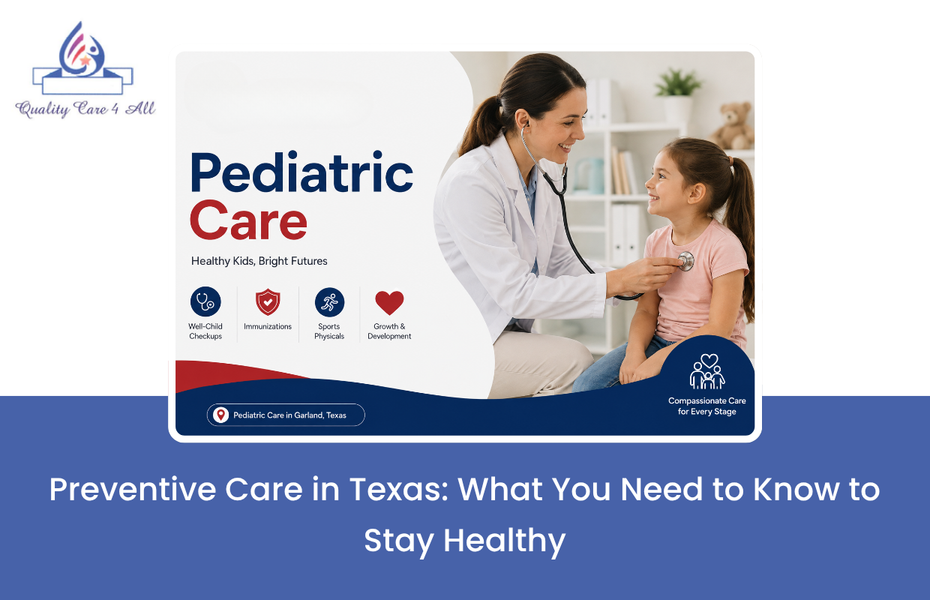
As a parent, nothing matters more than your child’s health. From newborn checkups and childhood immunizations to school physicals and adolescent wellness visits, Pediatric Care plays a vital role in helping children grow into healthy, confident adults. Regular visits with a trusted pediatrician allow parents to monitor their child’s physical, emotional, and developmental health while preventing illnesses before they become serious.
Whether you live in Garland, Dallas, Fort Worth, or anywhere in North Texas, choosing quality Pediatric Care in Texas ensures your child receives personalized medical attention from infancy through adolescence. At Texans Health and Wellness Center, families have access to comprehensive pediatric health services designed to support every stage of childhood.
What Is Pediatric Care?
Pediatric Care is specialized medical care focused on the health, growth, and development of infants, children, and adolescents. It includes well-child checkups, childhood immunizations, developmental screenings, sports physicals, preventive healthcare, and diagnosis and treatment of childhood illnesses to help children stay healthy throughout every stage of life.
What Is Pediatric Care?
Pediatric care is a branch of medicine dedicated to the unique healthcare needs of children from birth through adolescence. Unlike adult healthcare, pediatric medical care emphasizes prevention, healthy development, early diagnosis, and family-centered care.
A trusted pediatrician monitors your child’s:
- Physical growth
- Cognitive development
- Emotional well-being
- Behavioral health
- Nutrition
- Vaccination schedule
- School readiness
- Overall wellness
Comprehensive children’s healthcare also helps parents understand what developmental milestones to expect and when to seek medical attention for illnesses or concerns.
Why Pediatric Care Matters at Every Age
Children grow rapidly during their first 18 years of life. Each developmental stage presents unique health needs that require professional monitoring.
| Age Group | Primary Healthcare Focus |
|---|---|
| Newborn (0–1 month) | Feeding, weight gain, newborn screenings |
| Infant (1–12 months) | Growth, vaccines, developmental milestones |
| Toddler (1–3 years) | Language development, nutrition, safety |
| Preschool (3–5 years) | School readiness, behavior, immunizations |
| School-Age (6–12 years) | Learning, physical activity, preventive care |
| Teenager (13–18 years) | Puberty, mental health, sports clearance |
Routine pediatric wellness visits help identify concerns early, allowing treatment before problems become more serious.
Benefits of Well-Child Checkups
One of the most valuable parts of preventive pediatric care is the routine well-child checkup. These visits are designed to assess your child’s overall health, monitor development, and provide guidance tailored to their age.
During a Well-Child Visit, Your Pediatrician May:
- Measure height, weight, and body mass index (BMI)
- Monitor growth milestones
- Perform developmental screenings
- Review nutrition and sleep habits
- Assess hearing and vision
- Discuss emotional and behavioral health
- Update immunizations
- Answer parents’ questions
These routine visits help build a long-term relationship between families and healthcare providers while supporting healthy child development.
Benefits of Well-Child Checkups
| Benefit | Why It Matters |
|---|---|
| Early disease detection | Identifies health concerns before symptoms worsen |
| Growth monitoring | Ensures healthy physical development |
| Developmental screenings | Detects delays early |
| Preventive care | Reduces future health risks |
| Parent education | Provides guidance on nutrition, sleep, and safety |
| Vaccination updates | Protects against preventable diseases |
Why Childhood Immunizations Are Essential
Vaccinations remain one of the safest and most effective ways to protect children from serious diseases.
Following the recommended vaccination schedule helps prevent illnesses such as:
- Measles
- Mumps
- Rubella
- Polio
- Hepatitis B
- Chickenpox
- Diphtheria
- Pertussis (Whooping Cough)
- Tetanus
- Influenza
Childhood immunizations not only protect individual children but also help reduce the spread of contagious diseases within schools and communities.
Common Pediatric Vaccinations
| Age | Recommended Vaccinations* |
|---|---|
| Birth | Hepatitis B |
| 2–6 Months | DTaP, IPV, Hib, PCV, Rotavirus |
| 12–15 Months | MMR, Varicella, Hepatitis A |
| 4–6 Years | Booster vaccinations |
| 11–12 Years | Tdap, HPV, Meningococcal |
| Annual | Influenza vaccine |
*Vaccination schedules may vary based on your child’s health history and current medical recommendations.
What Happens During Pediatric Wellness Visits?
A child wellness exam is much more than a routine physical. It is a comprehensive evaluation that helps ensure your child is growing, learning, and developing appropriately.
A typical visit may include:
- Medical history review
- Growth measurements
- Vision screening
- Hearing assessment
- Developmental screenings
- Nutrition counseling
- Sleep evaluation
- Behavioral assessment
- Vaccination review
- Parent education
These visits provide valuable opportunities for families to discuss concerns about feeding, sleep habits, school performance, emotional well-being, or behavioral changes.
Wellness Visit Schedule
The American Academy of Pediatrics recommends routine wellness visits throughout childhood.
| Age | Recommended Visit Frequency |
|---|---|
| Newborn | Within first week after birth |
| First Year | Multiple visits during infancy |
| Ages 1–3 | Every few months as recommended |
| Ages 3–18 | Annual wellness visit |
Keeping these appointments helps ensure children stay on track with healthy growth, vaccinations, and developmental milestones.
Understanding Sports Physicals
If your child plans to participate in school athletics, most organizations require a sports physical before the season begins.
A sports clearance exam evaluates whether a child can safely participate in physical activity.
During a sports physical, providers typically assess:
- Heart health
- Blood pressure
- Lung function
- Joint flexibility
- Muscle strength
- Vision
- Previous injuries
- Medical history
These exams can help identify conditions that may increase the risk of injury during sports participation.
Real-Life Example
Emma, a 13-year-old from Garland, wanted to join her middle school’s volleyball team. During her annual sports physical, her healthcare provider noticed mild scoliosis that had not caused symptoms. Early detection allowed her family to consult a specialist, begin appropriate monitoring, and safely continue participating in sports with guidance.
Diagnostic Testing for Acute Childhood Illnesses
Children can become sick quickly, especially during school months when viruses spread easily. Prompt pediatric diagnostic testing helps healthcare providers identify the cause of symptoms and recommend appropriate treatment.
Diagnostic testing may be used for:
- Fever
- Sore throat
- Ear infections
- Respiratory infections
- Influenza
- COVID-19 (when appropriate)
- Strep throat
- Urinary tract infections
- Allergic reactions
Early diagnosis can help reduce complications and support a faster recovery.
Common Signs That Require Medical Evaluation
- Persistent fever
- Difficulty breathing
- Severe sore throat
- Persistent vomiting
- Dehydration
- Rash with fever
- Ear pain
- Unusual fatigue
- Persistent cough
Parents should seek prompt medical care if symptoms worsen or do not improve as expected.
Growth and Development Milestones by Age
Monitoring child growth milestones helps ensure children are progressing physically, socially, emotionally, and cognitively.
| Age | Developmental Focus |
|---|---|
| Infant | Smiling, rolling, crawling, first words |
| Toddler | Walking, language development, social interaction |
| Preschool | Fine motor skills, learning, communication |
| School Age | Reading, coordination, emotional growth |
| Teenager | Puberty, independence, mental wellness |
Every child develops at their own pace, but regular developmental screenings help identify concerns early when interventions are often most effective.
Supporting Healthy Development Through Every Stage
Parents play a key role in promoting healthy child development at home. Alongside routine pediatric visits, simple daily habits can make a lasting difference:
- Encourage a balanced, nutrient-rich diet.
- Promote regular physical activity.
- Establish consistent sleep routines.
- Limit screen time based on age-appropriate recommendations.
- Foster open communication about emotions and mental health.
- Keep up with routine wellness visits and vaccinations.
By partnering with a trusted healthcare provider, families can build a strong foundation for lifelong health.
Comprehensive Pediatric Services for Families in Garland and North Texas
Families searching for Pediatric Care in Garland or Pediatric Care in Texas benefit from having access to comprehensive services in one location. At Texans Health and Wellness Center, pediatric services are designed to support children from infancy through adolescence with preventive care, wellness visits, immunizations, sports physicals, growth monitoring, and diagnostic testing.
Parents can also learn more about the clinic by visiting About Texans Health and Wellness Center, explore available Medical Services, get to know Dr Jaye Krubally, or read more about Pediatrics Near Me in Garland.
Common Childhood Health Concerns
Parents often seek pediatric care for both routine wellness and unexpected illnesses. Some of the most common concerns include:
- Ear infections
- Colds and flu
- Strep throat
- Asthma symptoms
- Allergies
- Skin rashes
- Stomach viruses
- Constipation
- Headaches
- Behavioral or developmental concerns
A trusted pediatrician can determine whether a condition can be managed at home or requires medical treatment.
When Should You Visit a Pediatrician?
Many parents wonder whether a symptom is serious enough to schedule an appointment.
Schedule a routine visit for:
- Annual wellness exams
- Vaccinations
- Growth concerns
- School or sports physicals
- Nutrition questions
- Sleep problems
- Developmental concerns
Seek prompt medical care for:
- Fever in a newborn
- Difficulty breathing
- Severe dehydration
- Persistent vomiting
- High fever lasting several days
- Seizures
- Severe abdominal pain
- Blue lips or face
- Unusual lethargy
When in doubt, it is always safer to contact your child’s healthcare provider.
Pediatric Care vs Family Medicine
Both pediatricians and family medicine providers care for children, but pediatric care offers specialized training focused entirely on childhood health.
| Feature | Pediatric Care | Family Medicine |
|---|---|---|
| Primary focus | Infants, children, teens | All ages |
| Developmental expertise | Extensive | General |
| Vaccination management | Specialized | General |
| Behavioral and school concerns | Comprehensive | Basic to moderate |
| Sports physicals | Yes | Yes |
| Childhood illness diagnosis | Specialized | General |
For families seeking comprehensive children’s healthcare, dedicated pediatric services often provide more focused developmental and preventive support.
How Preventive Pediatric Care Supports Lifelong Health
Preventive care is one of the most important investments parents can make in their child’s future health.
Long-term benefits include:
- Lower risk of preventable diseases
- Earlier detection of health problems
- Healthier growth and weight
- Better school performance
- Improved mental and emotional health
- Reduced emergency visits
- Stronger family health education
Children who receive regular pediatric wellness visits are more likely to develop healthy habits that continue into adulthood.
A Real-Life Parent Scenario
School Physical in Garland
Michael, a 7-year-old in Garland, needed a school physical before starting second grade. During the visit, his provider noticed that his vision screening results were abnormal. His parents had not realized he was struggling to see the classroom board.
Because the issue was detected early, Michael received corrective glasses before the school year began, improving both his learning and confidence.
This is a simple example of how routine well-child checkups can uncover problems that might otherwise go unnoticed.
Why Choose Texans Health and Wellness Center
Families in Garland, Dallas, Fort Worth, and North Texas often look for a clinic that offers complete pediatric services in a welcoming environment.
At Texans Health and Wellness Center , pediatric care is designed to support children from infancy through adolescence with personalized, preventive, and evidence-based healthcare.
Services include:
- Well-child checkups
- Childhood immunizations
- Sports physicals
- School health evaluations
- Growth and developmental monitoring
- Diagnostic testing for acute illnesses
- Preventive pediatric healthcare
- Personalized care plans
Parents can learn more about the practice through About Texans Health and Wellness Center and meet Dr Jaye Krubally , who provides compassionate, family-centered care.
For a detailed overview of local pediatric services, visit Pediatrics Near Me in Garland .
FAQs
Pediatric care includes wellness exams, vaccinations, developmental screenings, sports physicals, illness diagnosis, growth monitoring, and preventive healthcare for children from birth through adolescence.
Infants require several visits during the first year of life. After age three, most children should have a wellness visit once every year unless additional follow-up is recommended.
Yes. Childhood immunizations protect children from serious and potentially life-threatening diseases and help prevent outbreaks in schools and communities.
A school physical reviews general health for school participation, while a sports physical focuses on whether a child can safely participate in athletic activities.
Talk to your pediatrician if your child is not meeting expected milestones in speech, movement, social interaction, learning, or behavior. Early evaluation is important.
Yes. Pediatricians diagnose and treat common illnesses such as ear infections, flu, strep throat, allergies, asthma symptoms, stomach viruses, and many other childhood conditions.
Keep Your Child Healthy at Every Stage
Your child’s health journey begins with preventive care and trusted medical guidance. Whether your baby needs newborn care, your toddler is due for vaccines, your child requires a school physical, or your teen needs a sports clearance exam, comprehensive pediatric care can make all the difference.
👉 Schedule a pediatric wellness visit today at Texans Health and Wellness Center .
Explore all available Medical Services and meet Dr Jaye Krubally to find personalized healthcare for your child in Garland, Texas.
Final Thoughts
Pediatric Care is much more than treating childhood illnesses. It is a long-term partnership that supports healthy growth, development, learning, and emotional well-being from infancy through adolescence.
Regular well-child checkups, timely childhood immunizations, thorough sports physicals, and prompt pediatric diagnostic testing help children stay healthy and give parents peace of mind. Families in Garland, Dallas, Fort Worth, and across North Texas can benefit from comprehensive, preventive, and personalized pediatric healthcare close to home.
By staying proactive and working with a trusted pediatric provider, you are giving your child one of the greatest gifts possible: a strong foundation for lifelong health.
Contact Us: Texans Health and Wellness in Texas



Pingback: What Is Pediatric Primary Care? A Parent's Guide | Garland, TX